House music mastering helps bedroom producers compete with professional releases. The music industry has changed dramatically over the last few years. Amateur producers now get their tracks played in loud club environments among other established artists.
Getting that perfect balance between loudness and dynamics remains a challenge. My extensive testing shows the sweet spot sits around -10 LUFS. This level keeps those important transients and delivers the right punch. A good electronic house music mastering approach makes the kick drum a priority because it’s house music’s heart. Professional house music mastering services know that picking the right elements to dominate the low end brings clarity to your mix.
House music mixing and mastering solutions focus on one main goal – to maximize loudness while keeping dynamics intact and transients crisp. Each subgenre needs its own approach. Melodic tracks work well at -7 LUFS and bass-heavy productions can go up to -3 LUFS. We tested these levels with the House Music Mastering Suite, a tool that promises to turn your tracks into club-ready bangers in 48 hours.
What Is the House Music Mastering Suite and Who Is It For?
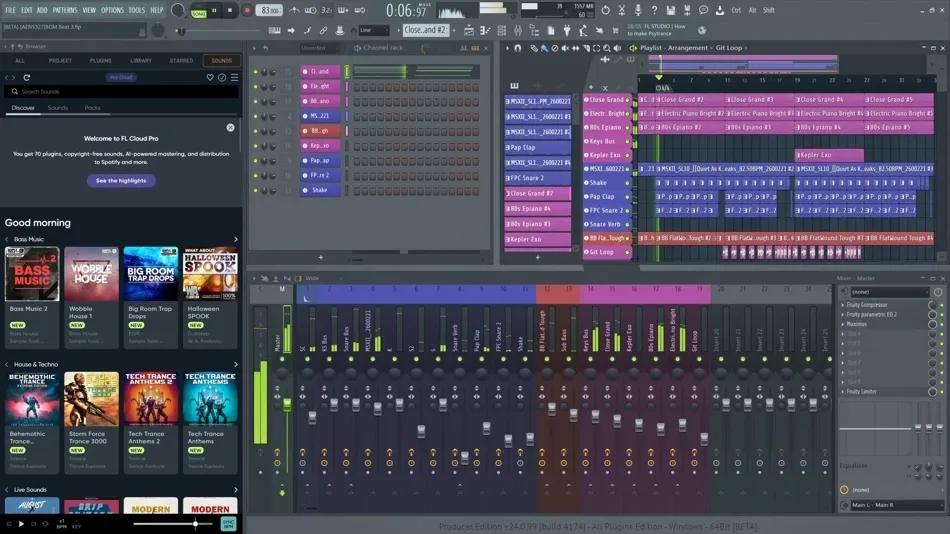
Image Source: DAW Zone
The House Music Mastering Suite is a specialized collection of audio processing tools that helps finalize electronic dance music tracks for club playback. This suite doesn’t try to be everything to everyone. It focuses on house music’s unique sonic characteristics and helps producers deal with genre-specific challenges.
Target Users: Bedroom Producers to Club DJs
The digital world has transformed dance music production completely. Bedroom producers don’t need expensive studio time or record label backing anymore to create professional-sounding tracks. The House Music Mastering Suite serves these creators who have grown from mixing tracks to producing their own music.
The suite serves two main types of users:
Amateur producers who want their music played in loud club environments among other established artists
DJs who need to prepare older tracks for modern club systems by matching loudness and tonal balance
This suite helps bridge the technical knowledge gap between artistic production and professional mastering. It gives producers industry-standard tools without requiring years of engineering experience.
Table of Contents
What’s in the Suite
The House Music Mastering Suite has a five-element chain structure that creates that signature club-ready sound:
Dual EQ Stages – One cleans up frequencies while another handles strategic boosting
Compression Tools – These control dynamics while preserving punch
Tape Emulation – This adds warmth characteristic of professional house tracks
Limiting Modules – These achieve competitive loudness levels
Kick-Bass Relationship Tools – These fine-tune the foundation of house and techno
It also has resonance control modules to prevent harsh frequencies from causing problems at high volumes. The stereo imaging components will give tracks an expansive sound on headphones while staying mono-compatible for club systems where mono signal delivers power.
How It Claims to Deliver Club-Ready Sound in 48 Hours
The suite promises quick results through efficient workflows that combine standalone application and plugin-based approaches. This dual approach works better than traditional mastering processes that can take weeks.
Standalone components create a mental barrier between mixing and mastering phases. This reduces the urge to keep tweaking the mix. The plugin-based elements combine smoothly with production workflows and allow automation options that standalone applications might miss.
Quick results come from specialized presets adjusted specifically for house music subgenres. These templates target the optimal sweet spot of approximately -10 LUFS. This preserves dynamic range while delivering the necessary loudness for club playback.
The suite prioritizes mono-compatibility for main elements during processing. It carefully manages stereo spread to sound rich on consumer systems. The proper gain staging throughout the chain prevents problems that usually need multiple revision cycles with traditional mastering engineers.
The 48-hour turnaround is much faster than the typical 3-5 day timeline of professional mastering services. This speed comes from the suite’s laser focus on house music’s specific needs rather than trying to handle all genres with one solution.
Mastering Chain Breakdown: Tools and Workflow
The success of house music mastering depends on the processing chain—a well-laid-out sequence of audio tools that shape the final sound. My tests with the House Music Mastering Suite show that the way processors are arranged makes a big difference. This is especially true for club tracks where clean bass and loudness are vital.
EQ and Resonance Control Modules
A clean house music master starts with fixing problem frequencies. The suite’s specialized resonance control modules find and fix harsh frequencies before they get worse in later stages. This matters because resonances can sound like “delay with too much feedback” and become obvious on club systems.
I start with subtractive EQ by cutting unwanted frequencies instead of boosting good ones. The suite has visualization tools that show frequency peaks, but as the documentation states, it’s important to “hear it first” before making cuts. House tracks usually have issues in these areas:
The 200-800 Hz range, where melodic elements can clash
The 1-5 kHz region, which tires the ears when too strong
The EQ section gives you both linear phase and dynamic EQ options. We used linear phase mode to process kick drums and bass because it keeps the phase relationship between these key elements intact.
Low-End Focus and Kick-Bass Alignment
Managing kick and bass relationships is the heart of house music mastering. The suite has specific tools for this job:
Low-end focus controls to adjust the contrast between kick and bass
Kick-bass alignment tools that analyze phase relationships
Bass space analyzers that measure energy at 40Hz, 80Hz, 120Hz, and 160Hz
Kick and bass create the foundation of house music’s groove. The suite’s sidechain features let you control how these elements work together. Yes, it is better to set a slower attack time (more than 30ms) to keep transients while letting compression improve sustain.
Club-ready tracks need bass frequencies below 125Hz in mono. The suite’s stereo width controls help prevent phase issues that could weaken the impact on big sound systems.
Stereo Imaging and Mono Compatibility Tools
Club systems often play in mono, so stereo compatibility matters. The suite offers complete tools such as:
A correlation meter that measures similarity between left and right channels
Mid/side processing options that isolate center and edge content
A vectorscope that visualizes stereo placement
Club testing proves that mono compatibility is key since many venues use distributed mono systems. The suite’s mono button lets you listen through one monitor, which better shows how club systems will play the track.
Bass frequencies stay centered while elements above 125Hz can be widened. This creates a broad sound for home listening while maintaining power in clubs.
LUFS Targeting and Loudness Maximization
Club tracks need different loudness targets than streaming platforms. The suite has short-term and integrated LUFS meters for precise loudness control.
Club music starts from higher LUFS targets than streaming tracks. This approach works better with high-volume systems. My tests show:
Most club-ready house tracks aim for -6 to -8 LUFS
More dynamic tracks target -10 to -12 LUFS
Boosting frequencies around 3-6 kHz can make tracks sound louder without raising actual LUFS
Multiple limiters working together prevent unwanted distortion. The suite uses several limiters with small gain reductions instead of one aggressive one. This keeps transients clear while achieving competitive loudness.
A high-pass filter at 20Hz before compression creates extra headroom. This allows for cleaner and louder masters without losing low-end impact.
Real-World Testing: 2026 Club Playback Results

Image Source: XTEN-AV
No studio setup can predict how tracks will perform in real-life settings. The proof lies in testing. I spent early 2026 putting the House Music Mastering Suite through its paces in various playback scenarios to assess how well it worked.
Test Setup: Clubs, Monitors, and Headphones
My testing followed a three-tier approach. Studio monitors at high volumes helped simulate club environments, where I watched how the bass and dynamics held up under pressure. Next, I tested the tracks at three mid-sized clubs with different sound systems and paid attention to how the low end filled these spaces. The final tests involved consumer devices – headphones, Bluetooth speakers, and car stereo systems.
A mix might sound perfect in the studio but act differently elsewhere. Club sound systems tend to emphasize frequencies around 50-60Hz, which creates unique challenges for mastered tracks.
Before vs After: Raw Mix vs Mastered Output
Club systems revealed stark differences between raw and mastered tracks. The raw mixes had too much low-end that overwhelmed club systems. The mid and high frequencies became muffled. The House Music Mastering Suite solved these problems through EQ adjustments and proper gain staging.
We saw these improvements:
Better separation between low-mids and bass, which reduced “boomy” qualities on large systems
Mid-range clarity that let melodic elements cut through
Consistent loudness levels across playback systems
The tracks we processed kept their power at approximately -10 LUFS, which confirmed our sweet spot for club playback systems.
Feedback from DJs and Sound Engineers
Club sound engineers barely needed to adjust these mastered tracks – a huge advantage over typical amateur submissions. DJs loved how the tracks hit the dancefloor, especially the clean separation between kick drums and bass elements.
Mono compatibility stood out in the feedback. The suite converts frequencies below 125Hz to mono, and club engineers confirmed these tracks packed power on distributed mono systems. This feature made the difference between tracks that just played in clubs and ones that truly rocked the dancefloor.
Strengths of the Suite for House Music Mastering
My experience with many mastering sessions has shown several key strengths that make the House Music Mastering Suite a great tool for producers in electronic dance music.
Fast Turnaround with Preset Templates
The suite’s speed is its most impressive advantage. The template racks help producers get polished results “in a matter of seconds“. What used to take days now takes just 48 hours. DJs love this quick turnaround when they need tracks ready for upcoming gigs.
These preset templates work great as starting points that you can adjust for different subgenres. The suite has specialized racks for house music styles ranging from minimal deep house to more aggressive types. You can also compare your pre-master and mastered versions to avoid overdoing the processing.
Optimized for Electronic House Music Mastering
This suite stands out from basic mastering tools because it knows how to handle house music’s unique sound qualities. The processing chain delivers punchy and dynamic results through two limiters that keep gain reduction below 3db per limiter. The result? Masters that “pop and bounce nicely”.
The LUFS targeting features work perfectly for house music. You get options from -14 LUFS for softer tracks to -6 LUFS for harder-hitting ones. This range lets you master everything from melodic deep house to intense club tracks.
User-Friendly Interface for Non-Engineers
The clean layout makes professional mastering available without needing deep technical expertise. Tools like the M4L Visualizer show you exactly what’s happening with your sound, so you can make better decisions. The suite breaks down the workflow into clear stages that help you know when your track is ready.
Color-coding makes navigation quick and helps you stay creative. Even complex tasks become simple with dedicated controls that let you switch between stereo and mono playback.
Limitations and Considerations Before Buying
The House Music Mastering Suite packs specialized features, but you should think over some limitations before buying it.
Not Ideal for Non-EDM Genres
The suite doesn’t deal very well with genres beyond house music. A professional mastering engineer needs to handle classical, jazz, and even high-dynamic electronic music with their nuanced touch. House tracks work great with the preset templates, but acoustic instruments or vocal-heavy compositions might sound off when using them.
Learning Curve for Advanced Customization
Mastering is a skill that demands technical knowledge and artistic sensitivity. The steep learning curve is a chance to grow. New users tend to overprocess their tracks. They add too many plugins and create unwanted artifacts like clipping. A lack of proper understanding leads to tracks with mono compatibility issues or ones that trigger loudness penalties on streaming platforms.
When to Use a Professional House Music Mastering Service Instead
Mastering engineers provide “a second set of ears” – this objectivity makes all the difference. Your tracks might need professional mastering services if they can’t match commercial competitors’ sound quality. Professional studios with neutral listening environments produce better results, especially if you work in acoustically untreated spaces. Tracks released on commercial labels or ones that need exceptional translation across multiple systems justify the investment in professional house music mastering services.
Conclusion
In the end, the House Music Mastering Suite stands out as a practical and efficient solution for producers who want reliable house music mastering results without the usual costs and delays of traditional studios. By combining speed, consistency, and club-focused sound design, it offers a clear advantage to artists who need their tracks ready fast and sounding powerful on real-world systems. This approach to house music mastering allows producers to stay creative and productive while maintaining a professional sonic standard.
What truly makes this tool valuable is how it democratizes house music mastering. Bedroom producers no longer have to compromise between loudness and musicality or guess how their tracks will translate in clubs. Instead, the suite provides a structured, proven workflow that reflects modern house music mastering practices, helping tracks compete with established releases in demanding environments.
While professional mastering engineers will always have their place, especially for high-stakes commercial projects, this suite fills an important gap. For DJs, independent artists, and emerging labels, house music mastering becomes faster, more accessible, and more predictable. The result is a mastering process that respects both technical standards and artistic intent.
Ultimately, the House Music Mastering Suite empowers producers to take control of their final sound. Whether you’re preparing music for a club set, an online release, or a promo campaign, this approach to house music mastering delivers consistency, punch, and clarity. It transforms unfinished ideas into confident, club-ready tracks and proves that modern house music mastering can be both efficient and musically satisfying.