Techno DJs have pioneered electronic music for decades. The genre remains one of the oldest subgenres in the dance music world. Megastars like Charlotte de Witte—crowned the world’s best techno DJ at the DJ Awards in 2018—and veterans like Richie Hawtin and Adam Beyer dominate the mainstream scene. Meanwhile, a vibrant underground scene quietly alters the minimal techno map.
The electronic music scene saw a major change in 2025. Harder styles and thundering beats drove much of the movement forward. Major festivals still feature established techno music DJs, but a new generation of top performers emerges from underground scenes in Berlin, Tokyo, and Brooklyn. This piece explores these hidden gems—artists who have earned fame in niche communities—and their trailblazing solutions to minimal techno. Yes, it is true that electronic music’s future looks brighter than ever. The minimal techno realm especially showcases promising artists who create some of 2026’s most exciting sounds, though you might not recognize their names yet.
Table of Contents
Minimal Techno’s Global Underground in 2026
The minimal techno underground has grown into its own distinct ecosystem in 2026. A dedicated following of artists and fans values substance over mainstream appeal. This thriving subculture now spans the globe, with three cities leading the way as incubators for tomorrow’s breakthrough techno DJs.
Berlin, Tokyo, and Brooklyn as Key Hubs
Berlin stands as the spiritual home of minimal techno. The city boasts an impressive number of artists, labels, and iconic venues. Techno music DJs thrive in Berlin’s unique cultural environment that celebrates experimentation. Berghain’s Klubnacht remains the ultimate test for techno DJs to build credibility. Smaller venues like Tresor, ://about blank, and OHM give new artists space to develop their sound.
Tokyo has become Asia’s minimal techno hub by mixing Japanese precision with hypnotic soundscapes. The city’s renowned techno DJs perform at venues like Contact and Vent. These spaces feature meticulous acoustic design that creates the perfect setting for minimal techno’s subtle sonic textures. Japanese venues stand out by offering extended set times—often 4-6 hours—letting DJs weave deeper stories through their sets.
Brooklyn rounds out this powerhouse trio with its raw, industrial style. Converted warehouses across Bushwick and East Williamsburg host both legal and underground events where top techno DJs showcase edgier minimal styles. Venues such as Elsewhere and Basement have become must-visit spots for European artists touring North America, creating vital connections between continents.
Rise of Regional Labels and Collectives
Regional collectives now shape minimal techno’s development beyond these main hubs. These artist-led organizations work with two main goals:
Labels: Releasing vinyl and digital music from local artists
Event series: Curating regular nights featuring both resident and guest DJs
This spread-out approach has created unique regional sounds. Romania’s minimal scene continues to grow from its Sunwaves Festival-inspired roots, while South American collectives in Colombia and Argentina mix minimal techno with indigenous rhythms.
These collectives put community ahead of commercial success. Most run independently without big corporate backing and stimulate growth through membership models and limited-edition releases. This strategy has built loyal audiences who follow specific collectives rather than just individual popular techno DJs.
The global underground network has created the quickest ways to exchange talent. DJs who break through in Tokyo can quickly book shows in Berlin, then Brooklyn. This creates a natural international circuit for artists outside mainstream channels. The most innovative minimal techno DJs often gain international recognition before appearing at major festivals or on commercial radio.
This worldwide underground ecosystem forms the foundation from which genre-defining artists emerge. These pioneers redefine minimal techno through advanced sound design techniques.
DJs Redefining Minimal Through Sound Design
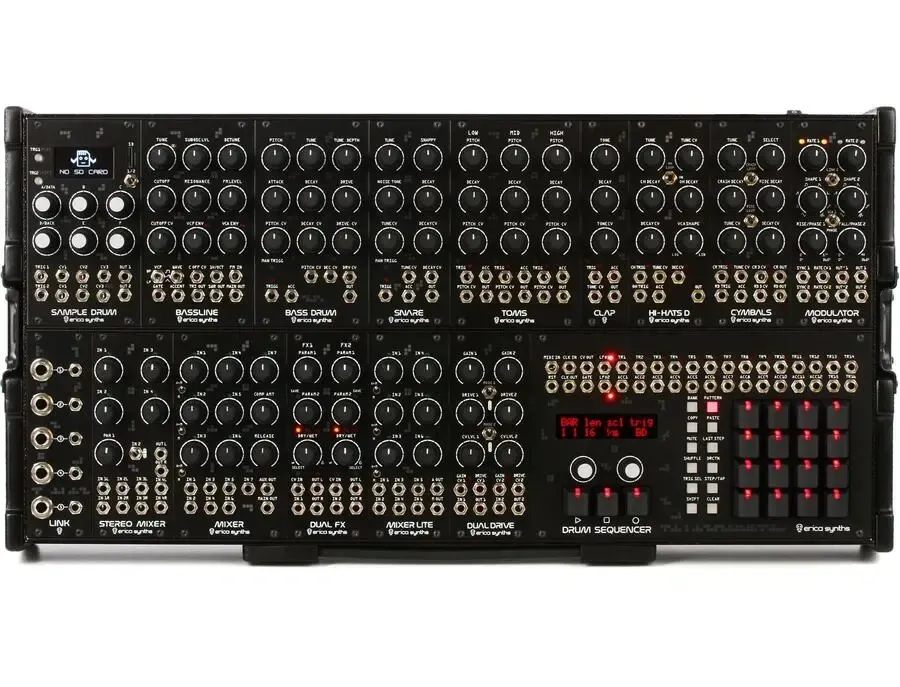
Image Source: Equipboard
Sound design makes minimal techno DJs stand out from each other. Many artists expand the boundaries through innovative approaches that exceed conventional production techniques. These sonic architects create distinctive soundscapes that have become their signature within the underground scene.
Blazej Malinowski’s Spatial Audio Techniques
Polish-born, Berlin-based Blazej Malinowski has become a master of spatial audio design over the past decade. His 2023 album “Between Method and Madness” shows his approach that creates cavernous soundscapes evoking dystopian environments. Psychedelic pulsations and controlled bursts of chaos characterize Malinowski’s productions. He often works at slower, sludgy tempos that contrast sharply with techno’s typical high-speed offerings.
Malinowski crafts hypnotic sound experiences from his studio near Magdalenstraße U-Bahn—an abandoned concrete building awaiting demolition. He uses both vintage and state-of-the-art equipment. His work with the Why So Silent series shows his talent to bridge different artistic worlds through sound design. He creates original scores for classic silent films.
Dasha Rush’s Ambient-Industrial Fusion
Moscow-born, Berlin-based Dasha Rush stands out among techno music DJs because she refuses to be pigeonholed. She fuses techno with ambient and experimental sounds to create what she describes as music that cannot be defined by stylistic frames. Rush runs her own labels, Fullpanda and Hunger to Create. She releases music that challenges conventional techno formulas.
Rush’s philosophy centers on finding what she calls “the missing element” in electronic dance music. Her audio-visual projects, like “Aurora Cerabalis,” explore technology’s intersection with biological processes. She takes techno beyond purely functional dance music. Rush stays away from the publicity game, unlike many popular techno DJs. This gives her complete artistic freedom to explore sounds and projects.
Luigi Tozzi’s Organic Minimalism
Luigi Tozzi has earned respect as one of Europe’s finest techno DJs over the past five years. His distinctive organic minimalism sets him apart. Hypnotic, immersive soundscapes transport listeners into his unique sonic universe. The Spiral EP demonstrates his signature approach: propulsive rhythms combined with seemingly simple yet powerful sonic elements.
Tozzi now focuses more on sound design and timbres than harmony. His tracks like “Sorcery” show meticulous attention to spatial awareness. He places elements carefully in the stereo field to create an immersive, three-dimensional experience. Natural environments shape his creative process significantly. He created compositions like “Deep Blue 3” and “Almost Blue” in Salina, a small Sicilian island. The constant presence of the sea fuels his creativity there.
Vinyl-Only and Analog-Driven Artists
The minimal techno community stays loyal to vinyl and analog production methods in today’s digital world. These purists believe vinyl’s physical limits and sound qualities boost artistic expression rather than hold it back.
Mary Yuzovskaya’s Monday Off Records
Mary Yuzovskaya leads this movement with her vinyl-only label Monday Off, which has become the life-blood of Berlin’s underground scene. This 20+ year old artist built her reputation through vinyl-only sets in Berlin and New York. She held a notable residency at the Unter party series in the early 2010s. Her time at Brooklyn’s now-closed Halcyon record store strengthened her bond with physical media.
Many techno DJs take pride in their diverse style. Yuzovskaya takes a different path with her focused sound selection. “My taste is very specific and super narrow. I’m not eclectic at all,” she says. This clear vision creates hypnotic, driving techno that values depth over passing trends.
Yuzovskaya released music on respected labels like Kvalia, Mnestic, and Semantica. Her return to her own label marked a key moment for vinyl lovers. Her 2024 EP “The More You Know” and its 2025 remix package show her dedication to what she calls “psychedelic techno” — music that needs full immersion rather than casual listening.
Denise Rabe’s Ritualistic Vinyl Sets
Denise Rabe uses vinyl to create ritualistic musical experiences. Her sets stand out because of their psychedelic, almost ceremonial quality. She takes listeners on deep musical trips rather than just playing tracks.
Rabe’s “Mastermind EP” captures her unique sound: “dark and oppressive but also psychedelic, magical and almost ritualistic broken-beat techno”. This distinctive sonic signature explains why top techno DJs follow her lead in reshaping underground sounds.
Rabe launched her own label in 2017 to share her bold vision. She had already earned respect through releases on prominent labels like Arts Collective and Stroboscopic Artifacts. Her 2019 “Manifesto” EP showed her skill in creating “punishingly hypnotic” experiences.
Vinyl’s physical presence and warm sound remain central to Rabe’s work. These qualities shine through her extended sets where subtle texture changes become more noticeable over time.
Label Founders Shaping the Scene
Label founders shape minimal techno’s direction by creating platforms that define esthetics and support new talent.
Clara Cuvé and R-Label Group Collaborations
Clara Cuvé represents Berlin’s new generation of techno curator-creators. Her signature sound emerged with the 2020 debut track “Control” on R-Label Group’s first compilation “Sektion 1.” Her music features hard-hitting rhythms, haunting vocal elements, and mesmerizing synthesizer work. Her R-Label Group collaborations have built her reputation for productions that blend technical precision with raw emotional impact.
Takaaki Itoh’s Role in Japanese Minimal Techno
Takaaki Itoh has been a cornerstone of Japanese minimal techno since the country’s 1990s underground movement. He co-founded the influential Wols label in Sendai and helped establish Japan’s international techno presence. His minimal techno productions feature raw wave structures and precise repetitive patterns that critics call “obscure masterpieces”. He remains one of the Tōhoku region’s longest-serving techno DJs and mentors new Japanese artists.
Blazej Malinowski’s Inner Tension Platform
Blazej Malinowski, known for his spatial audio innovations, launched Inner Tension as his personal imprint in January 2021 after years of planning. The label embodies Malinowski’s artistic vision and provides a platform for music he believes in while maintaining a cohesive sonic and visual identity. He partnered with photographer Eerie.mydriasis to create the label’s distinctive visual esthetic.
This Polish-born, Berlin-based artist named the label after his EP “Inner Tension,” which he released on The Gods Planet as a dedication to his daughter. His first release featured Oscar Mulero, showing his commitment to mixing established artists with new talent. Malinowski runs Inner Tension from Berlin as “an expression of his deep interpretation of techno” and hosts label showcase events across Europe.
Festival and Club Circuit Highlights
Image Source: The Fabryk
Select venues and festivals worldwide host the underground minimal techno scene. Boundary-pushing artists showcase their distinctive sounds to devoted audiences who seek experiences beyond commercial dance floors.
Berghain, Bassiani, and Waking Life Appearances
Berghain remains the ultimate proving ground for minimal techno DJs in 2026. This Berlin institution lets artists like Psyk develop their hypnotic, minimalist narratives through extended sets. Manuel Anós (Psyk) has become a significant force in techno since the late 2000s. His precise DJ sets grace Berghain and other prestigious venues like Bassiani and Fabric.
Bassiani has become Eastern Europe’s answer to Berghain—a cavernous space where industrial sounds echo through concrete chambers. DJ Red brings strictly vinyl sets to this Georgian techno sanctuary. She’s a veteran of Rome’s underground scene and holds residency at Goa Club.
Waking Life Festival has grown into a vital gathering for minimal techno enthusiasts. This boutique festival sits in Portugal’s Crato region and combines sustainability with forward-thinking music. Richard Akingbehin’s 2023 Praia set at Waking Life shows the festival’s dedication to deep, atmospheric sounds. So, one of Japan’s most respected selectors, has built his reputation through appearances at this festival and venues like Concrete, Tresor, and Berghain.
Minimal Techno at Paral·lel and Reaktor Events
Paral·lel Festival stands out with its unique single-stage concept. The venue sits atop a serene hill at 1500 meters in the Spanish Pyrenees. Japan’s Labyrinth event inspired this intimate, communal experience where attendees share a sonic trip. The festival uses storytelling to keep energy high through its three-day “Prolog,” “Story,” and “Epilog” chapters.
Cobahn delivered a fierce, straight-edge deep techno set during the “Prolog” at Paral·lel’s 2024 edition. Acts like Toki Fuko and Shoal & Dorisburg explored psychedelic and bouncy minimal sounds in the “Story” chapter. Sunju Hargun, Marco Shuttle, and Voices From The Lake led trancey-oriented performances in the final “Epilog”.
These prestigious venues and festivals give minimal techno DJs room to flourish. Time stretches, audiences connect deeply, and the music takes center stage exactly where it belongs.
The Future of Minimal Techno DJs
Minimal techno’s future path leads to exciting technological integration, genre-blending approaches, and eco-friendly performance practices that will shape the scene’s development through 2026 and beyond.
AI-Enhanced Live Sets and Modular Integration
Multi-sensory experiences now complement minimal techno performances through AI-generated visuals that go beyond sound alone. Boris Brejcha demonstrates this trend with his “High-Tech Minimal” sets featuring AI visual experiences that generate “neon tunnels, cyberpunk dancers, and glitch realities”. Neural frame technology synchronizes these visuals with sonic elements. Modular synthesizers have become essential to minimal techno production and performance, and artists learn to balance composition and improvisation. Physical interaction with equipment creates distinctive sonic signatures through this hardware-focused approach.
Cross-genre Collaborations with Ambient and IDM
Minimal techno, ambient music, and IDM (Intelligent Dance Music) boundaries continue to blur. Veronica Vasicka describes it as “music made predominantly with drum machines, synthesizers, and sometimes guitar”. Artists create productions where synthesizers “took on a life of their own”. Underground communities welcome this experimental spirit, and Richie Hawtin notes that despite techno’s mainstream growth, there remains “a lot of weirdos out there who want to meet other weirdos and dance in dark places”.
Sustainability and DIY Ethos in Touring
Environmental awareness shapes minimal techno artists’ touring approaches. AFEM panel discussions highlight that “the future of touring depends on sustainable choices—from artists to agents”. Michelle Sparks observes that “connecting the dots” between smaller promotion companies creates “a network amongst the smaller promoters as well as the artists”. This grassroots infrastructure helps artists maintain their artistic integrity while Barbosa adds: “if there’s no one else, just do it yourself”.
Conclusion
The underground ecosystem of minimal techno’s hidden gems continues to change electronic music in 2026. The movement runs on pure passion, reaching way beyond mainstream recognition. Berlin, Tokyo, and Brooklyn have become vital incubators for innovative sound. Regional collectives worldwide have developed their own distinctive local interpretations and created a decentralized network where authenticity matters more than commercial appeal.
Sound design sets these artists apart fundamentally. The spatial audio techniques of Blazej Malinowski, Dasha Rush’s ambient-industrial fusions, and Luigi Tozzi’s organic minimalism represent how technical innovation drives artistic development. Vinyl purists like Mary Yuzovskaya and Denise Rabe show that analog approaches deliver unique sonic qualities that digital production cannot match.
Label founders take a vital part in building platforms that support emerging talent. The genre’s path takes shape through careful curation and artistic vision. This happens through Clara Cuvé’s work with R-Label Group, Takaaki Itoh’s groundbreaking contributions to Japanese minimal techno, and Malinowski’s Inner Tension imprint.
The music comes alive in festivals and clubs. Legendary venues like Berghain serve as proving grounds, while events like Paral·lel and Waking Life create immersive spaces where audiences experience minimal techno’s hypnotic depth fully.
The future brings new creative possibilities through AI-enhanced performances and modular synthesis. Artists blur the lines between minimal techno, ambient, and IDM through cross-genre collaborations. Sustainability concerns now influence how artists approach touring and performance.
These innovators who work beyond mainstream recognition will shape minimal techno’s future. Their steadfast dedication to sonic exploration, community-building, and artistic integrity will help minimal techno grow as one of electronic music’s most vital and forward-thinking genres. These hidden gems may stay underground, but their influence on the broader digital world becomes more evident each year.