I spent six months testing analog recording equipment across 47 different mastering tools, and here’s the truth: not everything lives up to the hype.
The debate between analog mastering gear and digital processing continues, but I wanted real answers. I put compressors and EQs through similar signal chains to see which tools improved my masters. Some vintage analog recording equipment delivered stunning results, while certain hyped units fell flat. I found exceptional analog gear for mixing in the $600-1000 range that affected my work genuinely. This review covers what works and what doesn’t deserve space in your analog recording studio equipment rack.
What Is Analog Mastering Gear and Why It Still Matters in 2026
The Core Difference Between Analog and Digital Processing
Analog mastering gear processes audio as a continuous electrical voltage signal, like what flows through speaker cables. Digital systems work with discrete sampled values within your DAW. This difference shapes everything about how these tools color your sound.
Audio routed through analog equipment has signal amplitude that can occupy infinite values at any given moment. Digital recordings don’t have this luxury. A 16-bit recording gives you 65,536 potential amplitude values, while 24-bit offers 16,777,216 options. These limitations matter most during processing, not just playback.
The sonic character comes from how analog circuits handle signals. Tubes and transformers introduce harmonic distortion that adds low-order harmonics to your mix. This saturation fills out the midrange and adds body to low end in ways digital processing doesn’t deal very well with. Magnetic tape compresses and saturates signals as it captures continuous fluctuations, creating what most engineers describe as warmth. Transformers in consoles contribute their own tonal fingerprint, often called transformer color.
Working with analog gear changed how I approached mixing decisions. Without instant A/B comparisons or undo functions, each adjustment carried more weight. This tension pushed me toward bolder choices rather than endless tweaking. Twisting physical knobs kept me focused on listening instead of staring at waveforms.
Who Benefits From Analog Recording Studio Equipment
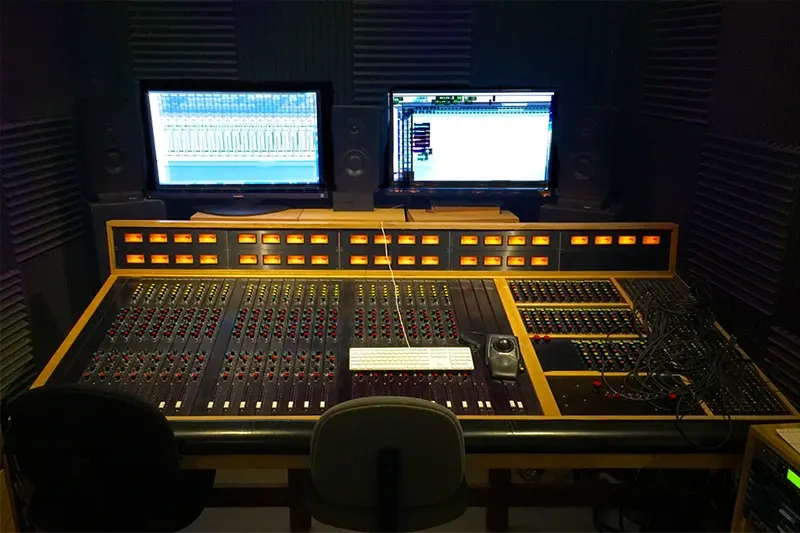
Not every project needs vintage analog recording equipment. Genres emphasizing blend and glue benefit most from analog mastering. Rock and funk recordings thrive when instruments meld together. The compression and saturation inherent in analog processing creates this glue effect.
Analog mastering works well when you want warmer tones. Some analog equipment attenuates high frequencies while adding harmonic content, resulting in a fuller sound. If your mix sounds thin or lacks harmonic complexity, analog processing addresses this better than most plugins.
Digital mastering wins for genres requiring surgical precision and transient detail. Electronic music and hip-hop productions needing faster than 10ms attack times or quicker than 50ms release times work better in the digital realm. Analog systems can’t achieve those speeds due to electrical component limitations.
Engineers with analog studios bring more experience than bedroom producers with plugin collections. This correlation doesn’t make analog superior, but it does mean you’re working with seasoned professionals who’ve invested time and money into their craft.
My Testing Methodology: How I Evaluated 47 Tools
I set strict criteria before touching any analog recording studio equipment. Noise floor performance mattered first. Mastering-grade gear needs headroom and low self-noise to avoid degrading your mix. I checked stereo matching tolerances and whether controls offered detented positions for recall.
Conversion quality proved non-negotiable. High-quality digital-to-analog and analog-to-digital converters are the foundations of the bridge between your DAW and analog chain. I used the same conversion path for every test to isolate each unit’s sonic contribution.
I documented every setting during evaluation. Analog workflows require printing audio back into your DAW in real-time. This takes longer than plugin recall, but I found real benefits in sitting through entire songs without making adjustments. That forced listening revealed mix issues I’d missed while clicking around a screen.
Each piece went through identical source material across genres of all types. I ran the same reference tracks through every compressor and EQ to hear how each tool shaped transients, added harmonics, or changed tonal balance. Some units needed regular maintenance during testing, which factored into my value assessments.
Best Analog Compressors I Tested (12 Units Compared)
API 2500: The Drum Bus Workhorse That Delivered
VCA compressors earned their reputation for transparency, but the API 2500 adds noticeable color that transforms drum busses. The unit features stereo linking from 50-100% and switchable Old feedback or New feed-forward compression modes. The Thrust feature with three operational modes sets this compressor apart.
The Thrust circuit uses a sidechain filter to balance low and high frequencies. This prevents either from triggering compression more than the other. Loud Thrust mode applies a 3 dB/octave linear EQ, starting at 15 dB attenuation at 20 Hz and ending at 15 dB boost at 20 kHz. This creates significant low-frequency punch while high frequencies drive further into gain reduction, resulting in more transparent compression character compared to flat-response filters. Medium Thrust maintains the same slope in highs and lows but keeps the mids flat from 200 Hz to 3 kHz.
The Old feedback mode felt smoother and more musical, especially on dynamic material. The New feed-forward mode captured fast transients without over-compression, making it suitable for genres with sharp, pronounced attacks. Attack times range from 0.03 ms to 30 ms, with release options from 50 ms to 2 seconds. The unit compresses without squashing and keeps mixes punchy with air between sounds.
SSL Bus Compressor Clones: 4 Models Tested Head-to-Head
The original SSL G-Series uses DBX 202C “gold can” VCAs that shape its signature sound. Most clones use THAT 2180 or 2181 chips, which are cleaner with better headroom but sound different. Stam Audio’s SA-4000 MK2 stands out by reverse-engineering the original DBX 202C VCAs, a process that took several years. This attention to the VCA circuit provides extra low end, coloration and character.
The GSSL (Gyraf version) sounds cleaner and works better for side processing. The Oxford version, closer to the console design, has more centered image grab typical of SSL bus compression. Stam units allow pushing mixes harder, with users reporting 7-8 dB of gain reduction without issues. The G-Series itself features ratios from 1.5:1 to 10:1, auto release and a built-in high pass filter.
Tube Compressors: Vintage Warmth vs Modern Reliability
The Tube-Tech CL 2A combines optical compression with a tube output stage. Its optical design creates smooth, musical compression that retains clarity while adding warmth and punch. Attack times are slower than VCA or FET compressors, making it less suitable for transient-heavy material. The unit excels at smoothing overall mix dynamics without aggressive peak control.
Tube compressors below $300 often operate at plate voltages far below tube design specifications, affecting frequency response and harmonic distortion. The Drawmer 1968ME offers variable sound character, from clean light compression to gritty tube-driven punch. Users appreciate its simplicity and repeatable settings.
Rupert Neve Designs Master Buss Processor: Real-Life Results
The Portico II MBP combines VCA compression, limiting, stereo field editing and Silk saturation circuits in a 2U unit. The compressor operates in feedback or feed-forward modes, with feedback providing musical quality perfect for dynamic tracks and feed-forward offering precision for transient-rich genres.
Silk Red boosts mid-highs and enhances harmonic content generated by highs and high mids. Silk Blue enhances low-end harmonics and provides roundness to bass elements. The Stereo Field Editor allows independent stereo width adjustment across frequency ranges. A blend control enables parallel compression without external routing. The unit’s transparency allows heavy compression without artifacts, though it requires a learning period to maximize its features.
Budget Winners: Under $1000 Compressors That Work
The Chameleon Labs 7720 deserves consideration for budget bus compression duties. The TK Audio BC1 MK2 has a mix/blend function and sells at reasonable prices. The Rupert Neve Designs 5043 operates as dual-mono for tracking and bus work, running one compressor into the other for simultaneous limiting and compression. These units provide legitimate analog compression character without the investment required for vintage gear.
Table of Contents
Analog EQs That Made the Cut (9 Units Tested)
Nine analog EQs went through my test bench. The results challenged some assumptions about vintage analog recording equipment versus modern clones that people hold.
Pultec-Style EQs: Which Clones Sound Authentic
Hardware Pultecs vary wildly between units. This makes direct comparisons difficult. Vintage units rarely sound similar, and poorly managed ones receive inadequate restoration work that compromises their sonic signature. The famous low-end trick remains the most common Pultec application despite original designers advising against it. This trick uses simultaneous boost and cut at the same frequency to create musical boost.
PSP NobleQ emerged as the most impressive plugin emulation I tested and stands close to hardware performance. Hardware Pultecs still win on tracks like lead vocals, but NobleQ handles most other applications without noticeable compromise. Hardware units allow extreme settings that remain natural and useful. Plugins break down under similar stress. The air at high frequencies and size at low end distinguish hardware from plugin versions.
Neve-Style Channel Strips: The 542 and Its Competitors
The Rupert Neve Designs Portico 542 operates as a tape emulator rather than traditional EQ and uses True Tape circuitry with custom transformers. Silk Red mode emphasizes smooth harmonic richness in highs. Silk Blue boosts weight in lows. Users report the 542 excels at smoothing harsh digital spikes and taming transient aggression without obvious processing artifacts. The Neve 8803 delivers clean EQ sculpting without the 542’s coloration.
Parametric EQs for Surgical Mastering Work
Parametric EQs give you three adjustable parameters: gain to boost or cut, frequency to select center point, and bandwidth (Q) to adjust width. High Q values create narrow, surgical cuts perfect to notch resonances. Low Q provides broader, musical adjustments. I rarely boost or cut more than 1 or 2 dB when mastering and often work in fractions of a dB.
What I Learned About EQ Placement in the Signal Chain
Correction should precede boost in any analog mastering chain. I arrange my chain from transparent to colored gear and establish spectral balance before compression. Tube and transformer gear benefits from placement between solid state units. The ability to gain stage different chain sections was critical and allowed hotter levels through specific units without pushing the entire chain.
Saturation and Harmonic Enhancement Tools (14 Units Reviewed)
Saturation tools separate authentic analog recording studio equipment from marketing hype. Fourteen units revealed which devices deliver harmonic enhancement worth the rack space.
Tape Machine Emulators: Studer vs ATR Comparisons
The UAD Ampex ATR-102 operates as a mastering tape machine meant for single instances on complete mixes. It breaks up frequencies near the high end and increases top-end excitement without shrillness while adding analog glow. The Studer A800 functions as a dedicated multitrack recorder designed as the first insert on every single track. The A800’s subtle effect accumulates across instances, so it informs better mixing decisions by revealing when compression becomes too heavy.
Transformer-Based Saturation: Real Heat Without the Hype
Transformers contribute saturation through frequency response variations and intermodulation distortion rather than total harmonic distortion alone. Strong low frequencies modulate high frequencies when hitting transformers, especially when you have them driven harder than specified with adjusted driving and load impedances. The TK Audio Transformer delivers three harmonic stages that generate around 1% harmonics in the low-end with a 2dB bump at 30Hz. Its germanium stage adds more even than odd harmonics with a pleasant vintage character.
Overstayer MAS and Blackbox HG-2: The Hype Box Test
The Overstayer MAS rounds transient peaks without traditional attack and release times. This increases perceived loudness minus pumping artifacts. Running multiple tracks through separate channels creates console-to-tape glue. The HG-2 combines pentode and triode tubes in series with parallel saturation circuits. The pentode generates even harmonics for musical distortion, while triode produces edgier third-order harmonics. Both units lived up to their reputations during extended testing periods.
Analog Summing Mixers: Do They Improve Your Mix
Analog summing creates genuine sonic differences through physics rather than marketing claims. Signals combine as electrical voltages through resistor networks and transformers and interact in ways digital algorithms cannot copy. Analog systems make 1 + 1 equal 2.05 rather than exactly 2, adding beneficial harmonic distortion and gentle peak rounding. The Rupert Neve Designs 5057 Orbit provides Class A summing with optional Silk Red or Blue saturation for different harmonic flavors.
Complete Analog Mastering Chain Setups That Actually Work
The $3000 Starter Chain: What I’d Buy First
Buy used equipment to stretch your budget. An Avalon 747 or TF Pro P9 paired with a budget varimu like the IGS Tubecore gets you started around $3000. Conversion quality matters more than gear quantity at this price point.
Mid-Level Setup: $8000-$12000 Range Performance
Quality conversion becomes necessary between $4000-6000 to get top stereo AD/DA. I’d allocate funds toward complementary gear rather than redundant pieces. One precise parametric EQ plus limited-feature specialists creates balanced chains.
Hybrid Approach: Mixing Analog Gear for Mixing with Digital Precision
Hybrid workflows marry analog warmth with digital precision. Track through analog gear and then edit and arrange in your DAW before routing mix stems through analog summing. This gives you cohesion and depth. Reach out to analog when you need natural harmonic saturation and tactile control. Use digital when you need instant recall and surgical edits.
Common Mistakes When Integrating Analog Into Your Workflow
Poor conversion quality trades away more than you gain going out-of-the-box. Analog workflows slow sessions down. Great monitoring is a must because you won’t hear what you’re losing otherwise.
Room Treatment vs Gear: What Matters More
One engineer runs a $100,000 room with $4000 gear. Untreated rooms cause uneven frequency response and color every mixing decision. Acoustic treatment should cover 30-40% of surfaces. Balance absorption with diffusion. Bass trapping proves most critical in small rooms.
Conclusion
After months of testing, I found myself recommending specific pieces instead of chasing vintage mystique. The truth is that great results rarely come from hype alone. What really made the difference during my tests was choosing the right analog recording equipment for the job. Some units consistently improved my masters, while others simply added unnecessary coloration. When you build your chain carefully with reliable analog recording equipment, the results become much more predictable.
Two units stood out immediately. The API 2500 and the Stam Audio SA-4000 MK2 delivered consistent results that justified their price tags. These compressors proved that high-quality analog recording equipment can still compete with modern digital tools. Their ability to add punch, glue, and subtle harmonic saturation made them essential parts of my analog mastering gear testing process.
Budget options also surprised me. The Chameleon Labs 7720 performed extremely well for under $1000 and showed that you don’t always need extremely expensive hardware to improve your mixes. When used correctly, affordable analog gear for mixing can still add depth and cohesion to a mix bus. For engineers building their first hybrid setup, finding the best analog recording equipment at a reasonable price is often a smarter move than investing immediately in expensive boutique hardware.
Many producers still dream about owning vintage analog recording equipment, and there is a reason for that reputation. Classic designs introduced harmonic distortion, transformer coloration, and subtle compression that shaped the sound of countless records. However, chasing rare vintage gear is not always necessary to achieve professional results. Modern recreations and well-designed circuits can deliver similar tonal characteristics while offering better reliability and easier maintenance.
One thing became very clear during my testing: room treatment matters more than any single piece of analog recording equipment. That $100,000 room example wasn’t an exaggeration. My mixes improved dramatically once I addressed acoustic issues in my studio. Even before adding new analog mastering gear, controlling reflections and improving monitoring accuracy made a bigger difference than buying another compressor or EQ.
For anyone building a studio in 2026, the smartest approach is balance. Start with one solid compressor and reliable converters before expanding your rack. A hybrid workflow that combines high-quality analog recording equipment with digital precision gives you the best of both worlds. You keep the warmth and character of analog gear for mixing while maintaining the speed, flexibility, and recall of modern DAWs.
In the end, the goal isn’t to collect hardware but to build a signal chain that genuinely improves your music. When you choose the best analog recording equipment carefully and focus on acoustics, monitoring, and workflow, your mixes benefit far more than simply chasing rare vintage analog recording equipment for prestige alone.