I spent months testing analog vs digital mastering techno to settle a debate that’s divided producers for years.
Does analog gear add that magic warmth to hard-hitting techno, or is digital precision what club tracks need?
I ran similar techno productions through both workflows and compared everything from sub-bass response to how they performed on massive PA systems. The differences were clear but not what I expected. Some surprised me, especially at high volumes where digital mastering showed unexpected weaknesses. This breakdown shares what I heard and which approach delivered better results for the dancefloor.
Analog vs Digital Mastering Techno: Loudness & LUFS Explained
Why Techno Just Needs Specific Mastering Approaches
Techno’s repetitive structure creates mastering challenges that don’t exist in other genres. The same kick drum hits every beat for eight minutes straight. That snare pattern loops endlessly. These repetitive elements mean any flaw in the frequency balance gets magnified a hundred times over during a track’s runtime.
Streaming platforms changed the game. Spotify, Apple Music, and YouTube apply loudness normalization that adjusts tracks to their target LUFS values. The algorithm analyzes the loudest section of a track and adjusts volume. If a much louder peak appears elsewhere, a limiter cuts it off. What’s more, techno targets levels much hotter than other electronic genres. House music sits around -12 LUFS, but techno pushes up to -7 LUFS. That five-decibel difference isn’t arbitrary. Harder genres within techno can still have that overdriven, peaking sound with minimal dynamics because the esthetic allows it.
Club systems handle loudness differently than streaming platforms. DJs used the gain knob for loudness correction, though modern mixers and digital players now automate this function. So producers no longer need to destroy dynamics with excessive limiting just to compete with other tracks in a DJ set. The mixer handles level matching.
The Role of Loudness and Transients in Club Music
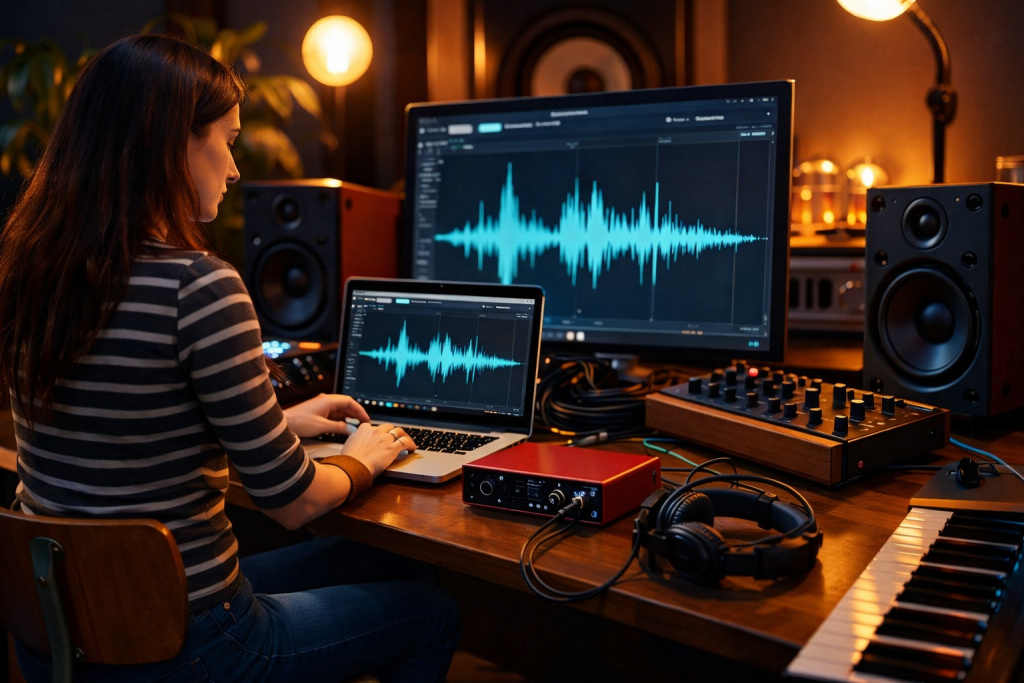
RMS levels tell a different story than peak levels. Peak levels measure the highest spike at any specific moment, which comes from kick drum transients. RMS measures average loudness over roughly 300 milliseconds. My drums included sharp spikes at sample beginnings, creating high peak volume but low overall loudness. Understanding this difference became critical when comparing analog mastering vs digital approaches.
Streaming services target around -14 LUFS as their standard, but that spec works for acoustic singer-songwriter material, not techno. EDM tracks want to hit -8 to -6 LUFS. The crest factor (the gap between average RMS and peak levels) runs much lower in electronic music compared to acoustic genres. A string quartet might have 14-16 dB of crest factor. Techno rarely exceeds 8-10 dB.
Sub-bass control matters more in techno than most producers realize. Club subwoofers run at maximum capacity, and PA systems have limiters on the low end. Dynamic sub-bass forces the DJ’s gain meter high, triggering loudness penalties from their equipment. I learned to control sub frequencies tightly during mastering to avoid this issue.
Transient preservation separates good techno masters from weak ones. Digital mastering preserves transients with minimal harmonic generation. Limiters process the entire frequency spectrum at once, so when the kick hits the ceiling, the hi-hat can’t peak at that exact moment. Multiband compression solves this by allowing independent control across frequency bands. I set high compression ratios in the bass area while reducing volume, then decreased the ratio toward higher frequencies to maintain dynamics.
Digital Production Meets Mastering Choices
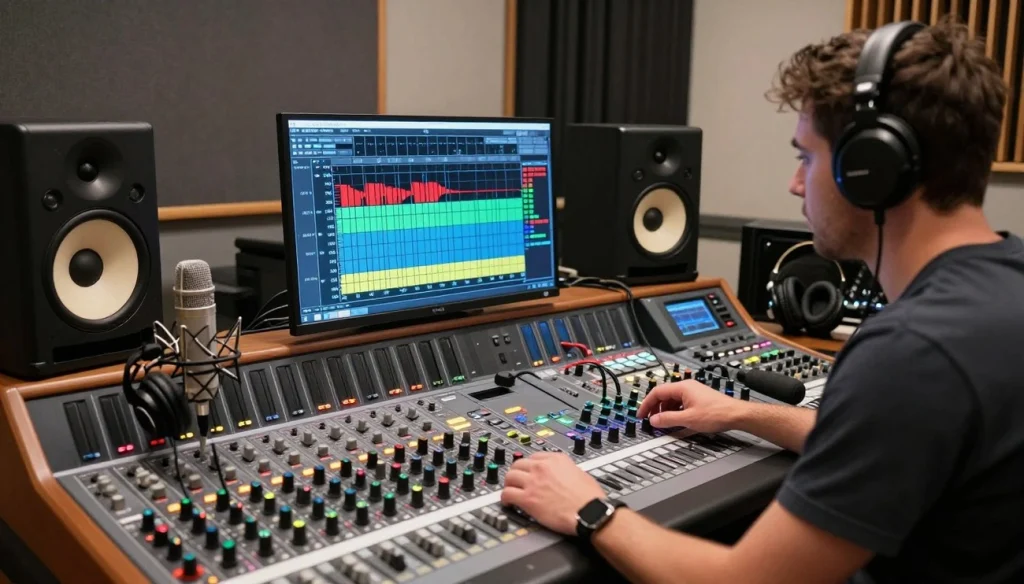
Techno originates in the digital domain. Patterns get programmed in DAWs, sounds come from software synthesizers, and the production esthetic welcomes that electronic character. This digital foundation influences whether analog mastering electronic music even makes sense for the genre.
Digital mastering works well for genres where clarity and transient response take priority. Techno lives or dies by kick drum punch and hi-hat sharpness, so the clean precision of digital processing appears ideal on paper. The post-loudness war era shifted mastering priorities. Engineers now focus on warmth and overtone richness rather than maximizing volume. This philosophical change opened space for both analog and digital mastering techno to serve different artistic visions.
Avoiding heavy limiting became my new standard. Working without a limiter first let me hear what compressors contributed to the sound. Makeup gain adjustment or auto-makeup gain kept levels consistent during comparisons. More headroom for transients provided another resource. If a percussive element needed punchy dynamics, I preserved them rather than squashing everything flat.
My Testing Setup and Methodology
The Analog Chain I Used
Setting up the analog chain required routing digital mixes through high-quality converters. The signal path started with a digital-to-analog converter feeding the processed audio into analog hardware, then back through an analog-to-digital converter for recording into the DAW. This conversion process adds its own fingerprint to the sound. Harmonic distortion and noise become part of the analog character.
I built a cost-efficient analog effect chain using guitar stomp boxes and a small analog mixer. The mixer allowed me to set up send-return effect chains and saturate incoming signals to add overtones that are difficult to achieve in software. So I could saturate only the signal sent to stomp boxes or the wet signal returning to the mixer.
I incorporated delay, reverb, and distortion into the chain. The compressor sat at the end because it highlighted quieter reverb tails and fine nuances of the audio signal. Parallel processing runs let me saturate kick drums slightly with an insert effect at 100% wet, then mix in about 30% of an analog effect chain with more aggressive distortion and mono reverb. This parallel approach prevented distortion pedals from destroying low-end frequencies, which they tend to cut.
Digital Tools and Plugins Tested
I spent weeks testing leading mastering plugins on real techno tracks and pushed them to typical levels around -8 dB RMS. My testing centered on peak-time hard techno at 140 BPM. I assessed each limiting style and monitored how well plugins preserved kick drum transients under heavy gain reduction.
The Audition Limiting function became a great way to get insights during testing. This feature solos the difference between input and processed output and isolates the effect of limiting so I heard only the gain reduction and distortion. I tested IRC 5 on industrial techno at -9 LUFS and challenged where earlier Ozone versions introduced audible breathing.
Ozone 12 delivered impressive results on a peak-time techno track at 140 BPM. The master achieved -9 LUFS without the digital strain previous versions introduced. I used moderate Drive settings with softer knee shapes on pre-master material and added weight to basslines while controlling peak levels before they hit Elevate’s limiter stage.
Testing Elevate on industrial techno revealed impressive loudness capabilities. The multiband approach let me achieve competitive RMS levels even when the kick drum dominated the pre-master mix. I slapped the L2 on a hard techno mix for quick tests and dialed in 4 dB of gain reduction. A club-ready test master was done in under a minute.
Table of Contents
How I Compared the Results
A/B testing gave an objective framework for making subjective decisions. I set up my DAW to easily switch between the two options, though level matching became critical. Volume differences as small as 0.5 dB trick the brain into thinking louder equals better. Louder versions appear clearer and punchier even when they’re not.
I always volume-matched my moves to ensure everything added to the music rather than taking away. I played tracks during mastering and switched between options while paying close attention to differences. I ran reference tracks through processing before mastering sessions to establish genre-appropriate targets.
Testing in different listening environments revealed how mixes translated outside my studio setup. I exported high-quality audio files and played them in my car and on a home stereo system. Each environment exposed different inconsistencies. Bass levels and vocal clarity shifted dramatically depending on the playback system.
Sound Quality Comparison: What I Actually Heard
Listening tests revealed differences that analyzer plugins couldn’t capture in full. I ran the same techno track through both processing chains multiple times and focused on specific elements that matter most for club playback.
Bass Response and Sub Frequencies
The sub-bass region showed the most dramatic differences between workflows. Digital mastering delivered what I dialed in with precision. A 0.5 dB boost at 100 Hz produced that adjustment with good digital tools, whereas analog processing added the fingerprint of converters, filters and harmonic distortion on top of the intended EQ move.
Analog mastering introduced lower-order harmonics that our ears notice less harshly. When I pushed bass signals through the analog chain, harmonic generation filled out the frequency spectrum in ways digital emulations couldn’t replicate. The digital version sounded solid and consistent in the 30-150Hz range. The analog treatment added thickness that I struggled to describe beyond calling it warmer.
Running digital bass through saturation plugins helped bridge this gap. I used harmonic distortion processors to add extra thickness, though achieving authentic analog character required careful tweaking. The advantage of analog systems became apparent when signals pushed past 0VU. Analog equipment provides an additional 20dB of headroom above 0VU and lacks the absolute cutoff that digital systems impose at 0dBFS.
Transient Sharpness and Kick Drum Clarity
Digital mastering won for transient preservation. Attack times below 1ms and release times under 5ms gave me surgical control over kick drum punch. Analog systems couldn’t match this precision, with attack times limited to 10ms minimum and release times no faster than 50ms.
This difference matters in techno. Sharp transients at sound beginnings define whether kicks cut through or get buried. Digital processing maintained these spikes without introducing unwanted harmonic content. The clean precision helped kicks retain their defining edge even under heavy compression.
But analog compression affected the groove differently. The slower response times created a feel that some producers prefer for repetitive elements. I noticed the analog-processed kicks felt rounder during testing and traded some attack sharpness for harmonic complexity.
High-End Brightness and Harshness
High-frequency harshness emerged as the biggest weakness of digital mastering. Pure digital processing with VST plugins created noticeable aliasing, artifacts and harsh transients in the mid and treble ranges. This harshness multiplied on large PA systems where amplifiers and speakers added their own harmonic distortion.
The problematic frequencies clustered between 2.5 kHz and 8 kHz. Digital systems reproduced harsh frequencies without the smoothing effect that analog tape and transformer-based equipment provided. What sounded acceptable on studio monitors became grating at club volumes.
Analog processing rounded off strong transients through harmonic distortion. This saturation softened digital harshness without requiring additional plugin processing. The analog chain introduced pleasant distortion that added depth and richness while taming aggressive high-frequency content.
Overall Stereo Width and Depth
Stereo imaging differences proved subtle but meaningful. Digital mastering provided precise control over mid/side processing and let me boost high frequencies in the side channel to add airiness without affecting centered elements. Cutting low frequencies in the side channel tightened the mix and improved mono compatibility.
Analog processing introduced its own spatial characteristics through the physical signal path. The stereo matching and tolerance of analog equipment became critical factors. High-quality analog gear maintained tight stereo imaging, though achieving the surgical precision of digital mid/side EQ remained impossible.
Phase issues required constant monitoring whatever the processing chain. Overextending the stereo field created mixes that sounded impressive on headphones but fell apart on mono systems. I switched to mono during testing to identify elements that disappeared or diminished and ensured club systems with summed bass wouldn’t lose critical low-end information.
Digital Mastering for Techno: Strengths and Weaknesses
Working in digital offered advantages I couldn’t ignore during months of comparative testing, especially when diving deep into analog vs digital mastering techno. The consistency and precision of digital workflows quickly became a defining factor in how I approached mastering decisions. In the broader context of analog vs digital mastering techno, digital processing stood out for its ability to deliver exact, repeatable results without unwanted coloration.
Signal integrity became the foundation of every decision. When working on analog vs digital mastering techno, maintaining a clean and transparent signal path proved essential for achieving controlled and predictable outcomes. Digital tools allowed me to apply a precise 0.5 dB boost at 100 Hz without introducing converter fingerprints, harmonic distortion, or noise. This level of accuracy is one of the biggest strengths in analog vs digital mastering techno, particularly when fine-tuning low-end balance.
As I continued exploring analog vs digital mastering techno, it became clear that digital mastering gives you full control over every parameter. Every move is intentional, every adjustment measurable, and every result fully recallable. This is especially valuable in professional workflows where revisions and consistency matter. In contrast, analog processing always introduced additional sonic characteristics—whether subtle harmonic distortion, noise, or coloration—regardless of whether they were desired in the context of analog vs digital mastering techno.
That difference became more apparent over time. In analog vs digital mastering techno, analog gear inherently adds personality, but digital tools offer neutrality. When a mix already sounded balanced and clean, digital mastering preserved that integrity without imposing extra texture. This made digital workflows ideal for modern techno productions where clarity, punch, and tight low-end control are critical aspects of analog vs digital mastering techno.
Another key advantage I noticed in analog vs digital mastering techno was workflow efficiency. Digital environments allowed instant A/B comparisons, precise automation, and total recall of settings. This made it easier to experiment, refine, and iterate without losing previous versions. In the ongoing comparison of analog vs digital mastering techno, this flexibility gives digital a significant edge in speed and practicality.
Ultimately, working in digital reinforced an important principle in analog vs digital mastering techno: precision is power. While analog brings character, digital mastering provides unmatched control, making it an essential tool for achieving modern, competitive techno masters.
Precision Control Over Transients
Transient processing separated digital mastering from analog approaches more than any other factor. I could target specific frequency ranges with multiband transient shapers and boost low-end attack while leaving hi-hats untouched. Analog compressors that affected the entire spectrum at once made this frequency-specific control impossible.
The attack enhancement capabilities transformed percussive elements. Digital transient processors analyzed how fast signal levels changed rather than responding to fixed threshold levels. This approach avoided the inconsistency of compression, where louder hits received more attack enhancement than quieter hits. I controlled rise time independently from peak level and sharpened transients even when limiters curtailed their maximum output.
Parallel processing expanded creative possibilities. I blended heavily compressed signals with uncompressed originals and retained dynamics while adding weight and density. The balance between these signals gave me controlled punch without sacrificing clarity.
Surgical EQ for Problem Frequencies
Narrow Q filters solved resonance problems that broader EQ moves couldn’t address. Surgical cuts removed fixed-frequency resonances created by room acoustics or instrument builds. I boosted problematic areas by 5 dB with a Q of 1 and scrolled through the spectrum to identify resonances. I tightened the Q to 2.5, then 5, before cutting 3 dB once I located them.
But surgical EQ introduced consequences I hadn’t predicted. Sharp phase shifts made sounds difficult to localize and blurred imaging while creating confusing soundstages. Notching specific frequencies disrupted harmonic sequences and gave each note a different timbre since different harmonics got deleted depending on the pitch. This added mental processing for listeners, as their brains perceived each note as a different instrument.
Limitations at High RMS Levels
Pushing digital masters beyond -9 dB RMS exposed fundamental limitations that became impossible to ignore when analyzing analog vs digital mastering techno in real-world conditions. The more I pushed loudness in digital workflows, the more these limitations revealed themselves. Digital EQ boosts sounded increasingly harsh and unpleasant, especially in the high-frequency range. In the context of analog vs digital mastering techno, this harshness became even more noticeable once tracks were pushed to club-level loudness.
As I explored analog vs digital mastering techno further, it became clear that boosting highs in digital mastering often introduced artifacts that didn’t exist in the original mix. More boost created more brittleness, and after limiting, those artifacts became painfully obvious at high volumes. This is one of the key weaknesses that defines the digital side of analog vs digital mastering techno, especially when compared to the smoother behavior of analog gear.
Digital compressors also showed their limits under pressure. Within the analog vs digital mastering techno comparison, heavy compression in digital chains produced distortion that stacked with each processing stage. Once the limiter added additional gain, that distortion multiplied, making the sound feel aggressive in a negative way rather than powerful. This effect became particularly problematic in dense techno arrangements where energy needs to remain controlled yet impactful—another critical insight when working with analog vs digital mastering techno.
At louder levels, transients and high frequencies turned harsh, overly crisp, and almost plastic-sounding. This is where analog vs digital mastering techno becomes most obvious to the ear. Digital processing, when pushed too far, stripped away the natural feel of the sound. Instead of depth, the mix collapsed into a flat, two-dimensional image, with elements glued together in an unnatural way.
The low end suffered as well. In analog vs digital mastering techno, bass is everything, and digital distortion caused sub frequencies to lose their roundness. Instead of smooth, controlled energy, the bass became squared and rigid, losing the organic movement that defines a powerful techno track. This contrast is a defining factor in analog vs digital mastering techno, where analog processing tends to preserve the musicality of low frequencies even under heavy load.
All of these observations reinforced a key conclusion about analog vs digital mastering techno: digital tools are incredibly powerful, but they reach a point where pushing louder comes at the cost of musicality. Understanding where that limit lies is essential. The difference between a clean, punchy master and a harsh, fatiguing one often comes down to how well you manage these constraints within the broader context of analog vs digital mastering techno.
Ultimately, mastering at high loudness levels requires careful balance. The deeper I explored analog vs digital mastering techno, the more I realized that knowing when to stop pushing digital processing is just as important as knowing how to use it.
When Digital Processing Sounds Best
Digital mastering excelled when clarity and separation mattered most. I achieved audibility through precision rather than analog distortion. Each mix element shined on its own and resulted in balanced, dynamic final products. Perfect recall eliminated documentation needs and sped up revisions. Visualization guided processing decisions, though I remained careful not to let meters replace listening. The affordability factor couldn’t be ignored either, with digital tools costing a fraction of equivalent analog processors.
Analog Mastering Electronic Music: What Changed
I ran techno through analog hardware. This contradicted everything I’d read about electronic music mastering. The consensus suggests electronic music needs digital clarity and huge transients rather than classic saturation and warmth. Yet I wanted to test this assumption with repetitive techno elements that play the same way for eight minutes.
Harmonic Saturation on Repetitive Elements
Analog devices add harmonics and compression to signals that pass through them. This saturation became especially noticeable on looping elements. The kick drum hit the same way 960 times in an eight-minute track. It gained subtle harmonic variations through the analog chain. Each pass through transformers and tubes introduced even-order harmonics that created warmth and thickness.
Tape saturation compressed transients while adding harmonic richness. This softening effect worked better than expected on digital sounds. Harsh synthesizer leads smoothed out without losing presence. The repetitive hi-hat pattern gained dimension it lacked before.
How Analog Compression Affected the Groove
Optical compressors reacted to material feeding them in ways VCA designs couldn’t match. Words like smooth, thick, and creamy described this compression style. The groove felt different. Transients were handled with a musical touch instead of surgical precision.
This musical approach to dynamics affected timing perception. The analog chain introduced slight inconsistencies that made repetitive loops feel less mechanical. As with vintage drum machines prized for their timing imperfections, analog processing added micro-variations that improved groove.
The Warmth Factor on Digital Sounds
Analog warmth on digital sources created an interesting paradox. Electronic music doesn’t benefit from the characteristics that make analog mastering essential for classic rock. Despite this, harmonic distortion improved overall energy by introducing frequencies that weren’t there originally.
Bass tones became thicker and drums gained punch through added harmonics. The soft-knee compression reduced dynamic range and brought quieter elements closer to peak levels. This gluing effect unified mix elements without the pumping artifacts digital limiters sometimes introduced.
Drawbacks I Found
Noise floor became my first concern. Low noise performance required careful equipment selection. Settings documentation consumed time I’d spent mixing during digital sessions. The up-to-the-minute printing requirement was especially frustrating, as songs needed recording back into the DAW. I couldn’t make changes during capture.
Maintenance costs added up. Analog gear required periodic servicing that digital plugins never needed. The conversion process itself added fingerprints I couldn’t remove. High-quality digital-to-analog and analog-to-digital conversion became mandatory. Expensive converters were essential before analog processing even began.
Which Approach Works Better for Club Playback
Testing on Large PA Systems
Bringing masters to actual clubs revealed differences studio monitors couldn’t predict. The venue I tested at featured a Funktion-One system capable of extending well below 40 Hz, contradicting older assumptions about club system limitations. The large space magnified bass frequencies and exposed subtle problems my treated studio room had masked.
Fletcher-Munson curves explained much of what I heard. Midrange and high frequencies register more prominently than low frequencies at higher volumes, potentially making bass sound unnatural if not managed. So engineers often reduce certain low-end frequencies via EQ to maintain crisp, defined sound.
Digital masters sounded impressive at moderate levels. But pushing volume revealed harsh edges compression drivers amplified mercilessly. Clipping proved painful on some tracks, with transients turning into ice picks through the PA. The digital artifacts I’d barely noticed on studio monitors became glaringly obvious when amplified through professional compression drivers.
Home Listening vs Club Environment Results
Translation differences between environments shocked me more than predicted. Tracks mastered to sound balanced at home volumes felt thin and weak on club systems. I adopted the practice of mixing at the volume level where the track would be played.
Mono compatibility became non-negotiable. Many clubs sum stereo to mono at the board, meaning wide stereo elements disappeared. Bass frequencies below 150 Hz required mono summing to prevent phase cancelation.
Why Analog Performed Differently at High Volume
Analog masters translated better at extreme volumes, similar to predictions from experienced mastering engineers. The harmonic distortion that seemed unnecessary in the studio prevented the harsh digital edge from dominating at high SPL. Analog processing added pleasant overtones that remained musical even when pushed loud, whereas digital masters turned aggressive and fatiguing.
Conclusion
By and large, neither approach delivered a knockout victory. When working on analog vs digital mastering techno, I quickly realized that each method solves a different problem rather than competing for a single “best” solution. Digital mastering gave me surgical precision and transient control that analog couldn’t match, especially for kick drum clarity, punch, and tight low-end definition. On the other hand, analog processing smoothed harsh digital edges and translated better on club PA systems at extreme volumes, which is critical when evaluating analog vs digital mastering techno in real-world environments.
The deeper I went into analog vs digital mastering techno, the clearer it became that context matters more than ideology. Digital tools excel when precision, speed, and recall are essential. If a track needs clean transients, controlled peaks, and consistent loudness, digital workflows dominate the analog vs digital mastering techno debate. However, when a mix feels sterile or overly sharp, analog processing introduces subtle harmonic distortion and nonlinearities that bring life back into the track—something that often defines the artistic side of analog vs digital mastering techno.
I found myself consistently switching approaches depending on the track. In analog vs digital mastering techno, digital became my go-to for peak-time, hard techno where punch and aggressiveness are key. Meanwhile, analog chains proved invaluable for deeper, hypnotic, or industrial techno where texture, warmth, and spatial depth play a bigger role. This balance is at the core of understanding analog vs digital mastering techno from a professional perspective.
Another important realization in analog vs digital mastering techno is that modern workflows don’t require choosing one over the other. Hybrid setups combine the strengths of both worlds. Using digital precision for corrective processing and analog gear for coloration often leads to the most musical results. This hybrid mindset is arguably the most effective way to approach analog vs digital mastering techno today.
Ultimately, analog vs digital mastering techno isn’t about which is better—it’s about intention. The best mastering decisions come from understanding how each tool shapes the sound and how that sound will translate on streaming platforms, headphones, and most importantly, club systems. Mastering techno is about energy, impact, and endurance over long playtimes, and both analog and digital approaches contribute uniquely to that goal.
In the end, mastering engineers who truly understand analog vs digital mastering techno don’t limit themselves to one workflow. They choose the right tool for the right moment, shaping sound with purpose rather than preference. That flexibility is what separates a good master from a great one in the evolving landscape of analog vs digital mastering techno. masters by combining both approaches—digital precision where it mattered and analog warmth where it helped.